
Replacing a septic system shares its bones with a new installation — soil evaluation, design, approvals, installation, restoration — but it carries extra weight a bare building lot never does. There's already a system in the ground, the property has a history of use, and the rules and standards may have moved since the original was put in. Those differences are what make replacement its own kind of project.
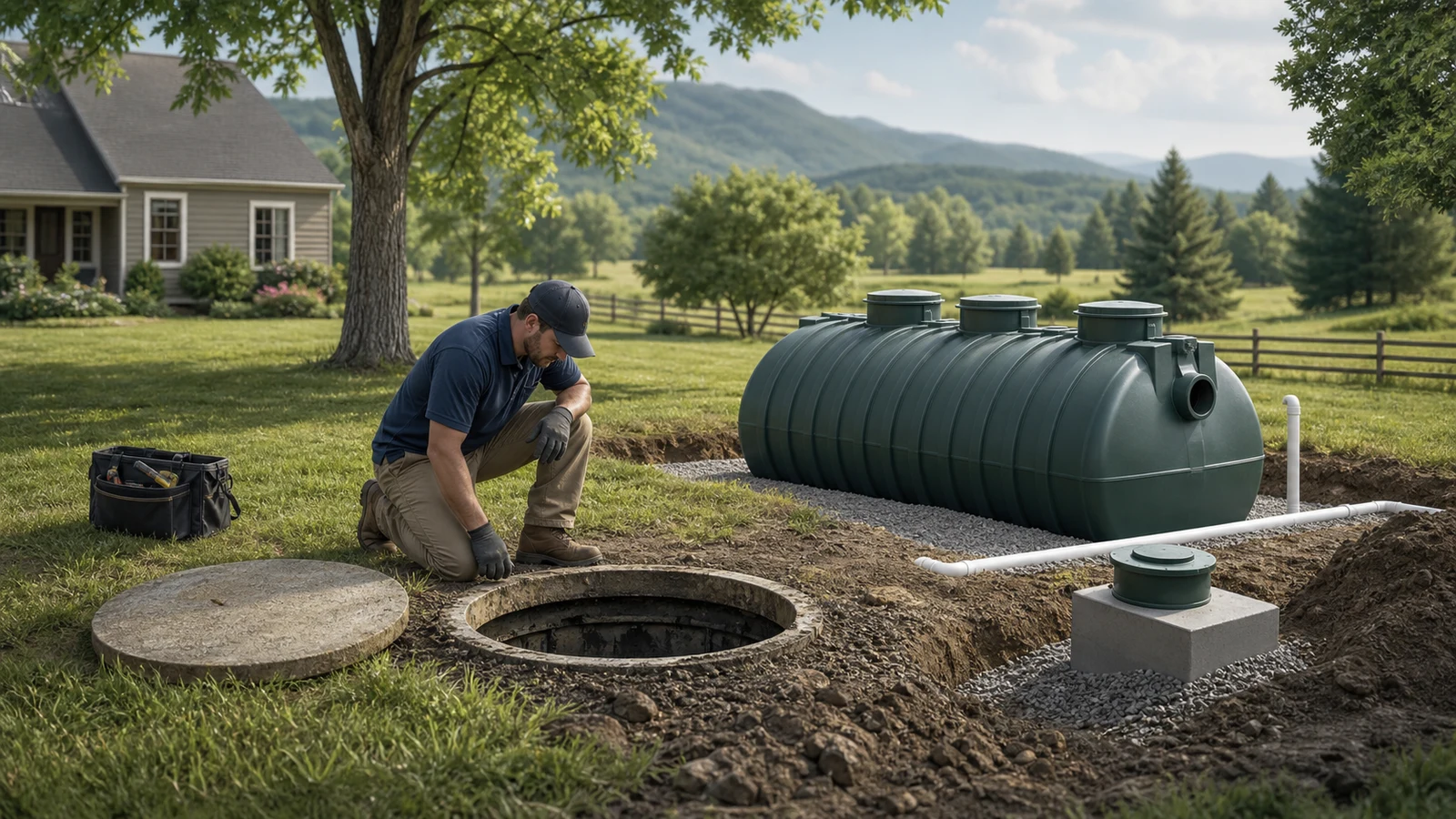
The Existing System Is Part of the Job
On a new build, the ground is a blank slate. On a replacement, the old system has to be assessed first — what's failed, what's still sound, and where everything sits. From there it has to be worked around or removed. Sometimes a component in good condition can stay: a sound tank paired with a new field, for instance. Other times a clean replacement is the more sensible path. That assessment is part of what the evaluation determines.
Years of Property Use Matter
A replacement also has to reckon with how the property has actually been lived on. Where structures, driveways, landscaping, wells, and mature trees now sit can shape where a new tank and field can go — constraints a fresh lot doesn't have. Good planning works with those realities rather than against them, which is part of why a replacement is designed specifically rather than copied from the original.
Designed for Today, Not Yesterday
A replacement system is designed to current site conditions and the requirements in force now, which may differ from the standards that applied when the original was installed. The soil is re-evaluated, the system is sized for the home's current use, and the design reflects today's rules. This is why replacement isn't a matter of simply reinstalling the same thing — it's a fresh design informed by the old system's lessons.
Deciding to Replace
Replacement usually enters the conversation after a failed drain field or a pattern of repeated problems on an aging system. Weighing that choice well is the subject of our guide on repair versus replacement, and what shapes the budget is covered in installation cost factors. If you're at that crossroads, the first step is an evaluation, not a quote. Request septic service to start.
This guide is general information for property owners, not professional advice for any specific system. Systems, soils and requirements vary by property and county — confirm specifics with a qualified provider or the appropriate authority. Cumberland Septic Hub is an independent referral service; provider availability, qualifications, pricing and service terms are determined by the provider.
Helpful Septic Guides
- Septic Installation and Replacement — the installation hub
- Septic Repairs and Drain Fields — when repair stops making sense
- Upper Cumberland Septic Guide — regional planning
Cumberland Septic Hub is an independent referral service. Requests may be shared with an independent local septic provider, and the provider determines availability, qualifications, pricing and service terms. Read the full referral disclosure.