
Sooner or later many septic owners face the big question: keep repairing the system they have, or replace it. It's the most consequential — and most expensive — decision in septic ownership, and it deserves a clear-eyed process rather than a snap judgment. The honest answer is that it depends, and the factors it depends on are ones you can understand and weigh.
What Pushes Toward Repair
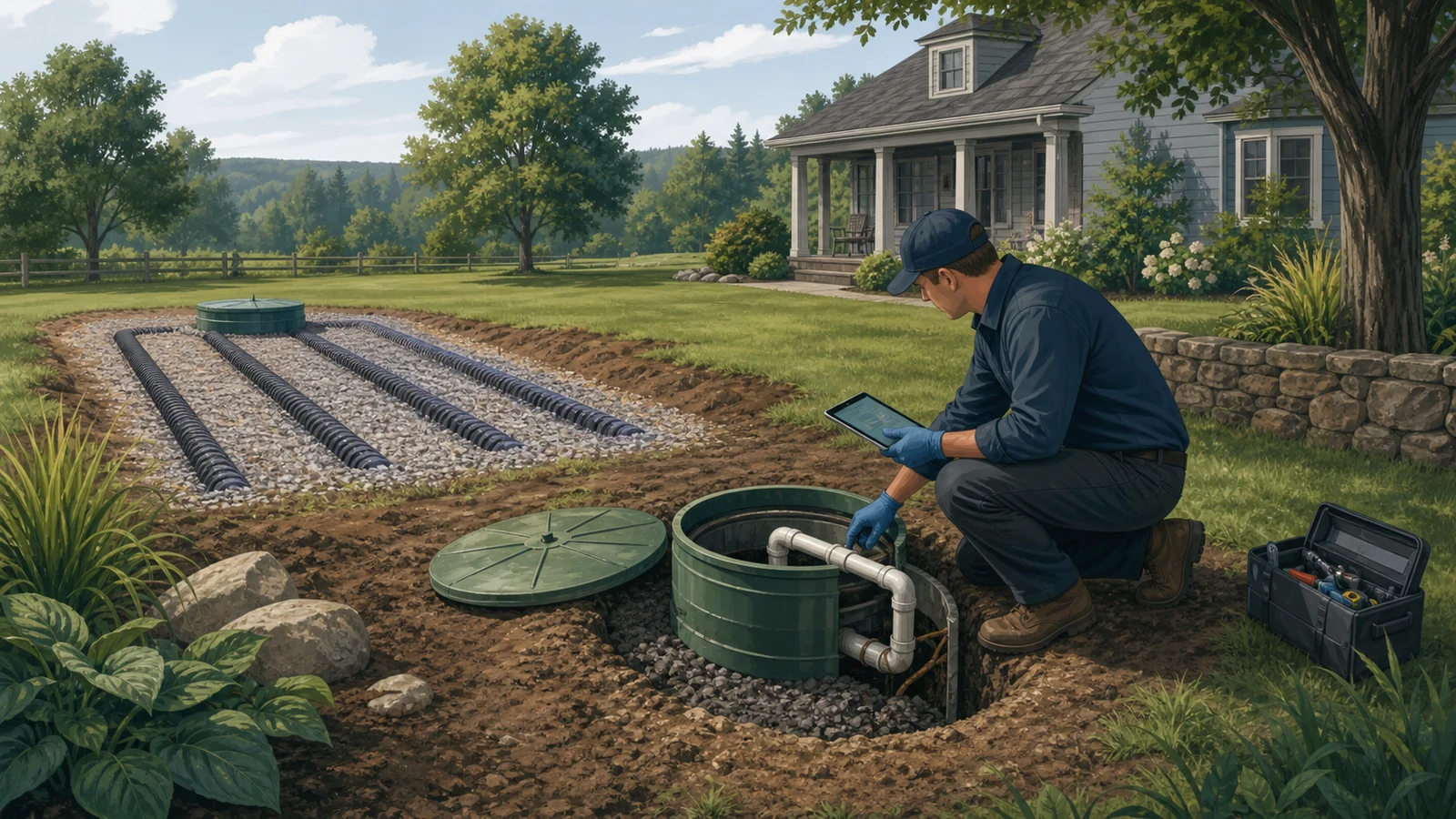
Repair is usually the right call when the failure is a specific, identifiable component on a system that is otherwise sound — a deteriorated baffle, a failed pump, a clogged line, or a distribution box that's overloading part of the field. If the tank is in good shape and the drain field still has capacity, fixing the one thing that failed restores the system, often for a fraction of a replacement.
What Points Toward Replacement
Replacement enters the picture mainly in two situations. The first is a genuinely failed drain field — when the soil can no longer accept and treat water, no repair to the tank or lines will fix that, and a new field (or system) is the path. The second is an aging system that's accumulating repeated problems: when repairs start stacking up and each one buys only a little time, continuing to patch it can quietly cost more than starting fresh.
The Factors That Feed the Decision
- What failed, and how. A single component is a different story than the field itself.
- Age and history. One problem on a young, maintained system versus a pattern of problems on an old one.
- Site conditions. What the soil and layout allow shapes both the repair options and any replacement design.
- The math over time. Not this repair versus replacement, but the likely total of keeping the old system running versus replacing it.
Insist on Trade-offs, Not a Default
The most important thing you can bring to this decision is a provider who explains options rather than defaulting to the biggest job. A trustworthy evaluation lays out what failed, whether it's isolated or part of a decline, what the site can support, and the realistic trade-offs — sometimes including a sensible middle path, like repairing now while planning for replacement down the road. Our guides on drain-field costs and the installation and replacement process fill in what each path involves.
Getting a Sound Answer
Because so much rides on the diagnosis, start with an evaluation rather than a quote. Describe the system's history and the problems you've had, and a provider can help you weigh the choice for your specific system and site. Request septic service to begin.
This guide is general information for property owners, not professional advice for any specific system. Systems, soils and requirements vary by property and county — confirm specifics with a qualified provider or the appropriate authority. Cumberland Septic Hub is an independent referral service; provider availability, qualifications, pricing and service terms are determined by the provider.
Helpful Septic Guides
- Septic Repairs and Drain Fields — the repairs hub
- Septic Problems and Warning Signs — symptoms that lead here
- Septic Installation and Replacement — the replacement path
Cumberland Septic Hub is an independent referral service. Requests may be shared with an independent local septic provider, and the provider determines availability, qualifications, pricing and service terms. Read the full referral disclosure.