
When Installation Becomes the Conversation
Septic installation projects arrive from two directions. New construction needs a system where none exists — the common case across rural Upper Cumberland, where sewer lines stop at the town's edge. Replacement projects retire a system that evaluation has shown to be beyond practical repair: an exhausted drain field, a structurally failing tank, or components whose fixes no longer hold. Home additions and property-use changes sit between the two — extra bedrooms, an accessory dwelling or a converted building can change what a system must handle, which can mean expansion or replacement even when nothing is broken.
The General Shape of a Project
Every property and jurisdiction differs, and requirements change — so treat this as the general sequence most projects recognize, not as instructions for any specific property:
- Property and project information. Lot size and layout, water source, planned structure, bedroom count and intended use.
- Site and soil-related evaluation where required. Soil and site conditions largely determine what kind of system can go where — this step shapes everything after it.
- System planning. Design, sizing and placement that fit the evaluation and the project.
- Applicable permits or approvals. Confirmed with the appropriate Tennessee or county authority for the specific property and project.
- Contractor selection. Scope, timeline, site handling and terms — settled before equipment arrives.
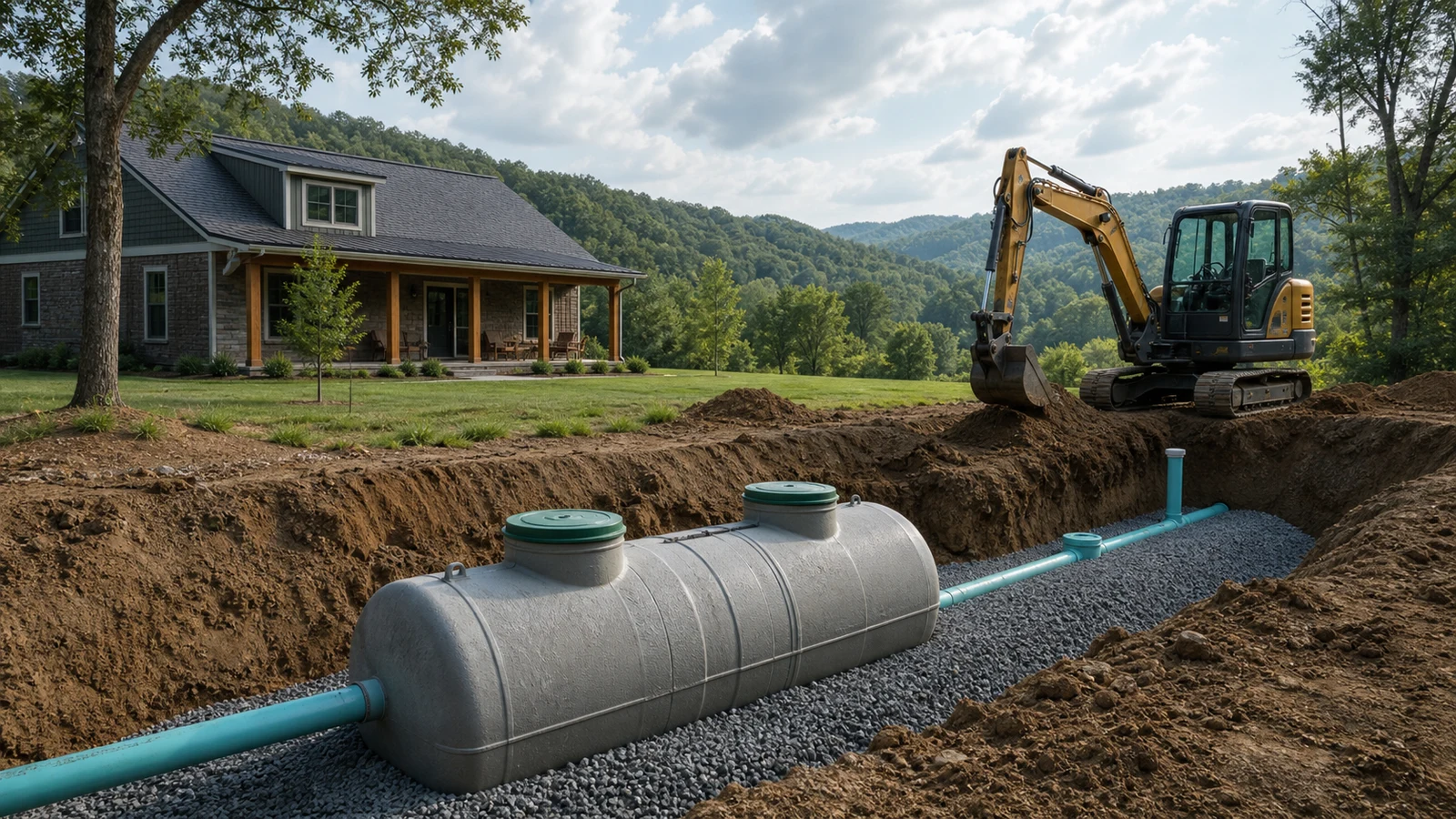
- Installation. Excavation, tank setting and field construction, paced by weather and access.
- Inspection or approval where applicable. Whatever verification the jurisdiction requires.
- Final grading and restoration. The surface put back as agreed with the contractor.
New Construction Versus Replacement
New builds have the advantage of sequencing — the system is planned alongside the house, and the site can be chosen with the field in mind. Replacements inherit constraints: the old system occupies ground, an exhausted field may rule out its own footprint, and the household usually needs wastewater service to continue during the work. Replacement fields often land on a different part of the property than the original — one of many reasons the site evaluation, not the old system's location, drives the plan.
Access and Site Realities
Installation is excavation work. Equipment needs a way in; trees, slopes, utilities and property lines all shape the layout; and saturated ground can pause a project. On plateau and lake terrain — common across this region — access questions deserve early answers, a topic the Upper Cumberland septic guide covers in regional detail.
Questions Worth Settling Before Ground Breaks
- What did the site evaluation find, and how does the design respond to it?
- What approvals apply to this property and project, and who obtains them?
- How will equipment reach the site, and what surface impact is expected?
- What does the timeline depend on — weather, inspections, materials?
- What restoration is included when the work is done?
One caution that repeats throughout this site because it matters: no system type can be called appropriate for a property without a qualified evaluation of that property, and requirements vary by property, project and jurisdiction. Confirm current requirements with the provider and the appropriate authority rather than building plans on general information — this page included.
Starting a Project Conversation
Describe the project stage (planning, building, replacing), the property, what is known about any existing system, and your timeline. Request installation information and the project can be connected with an independent local installation professional who works from the property, not the brochure.