
Installing or replacing a septic system is the biggest undertaking in owning one, and unlike a routine pump-out, its budget genuinely can't be read off a chart. That's not vagueness — it's because the system is engineered for a specific piece of ground, and the ground varies enormously across the Upper Cumberland, from plateau rock to river-valley bottomland. Understanding the factors that shape the budget helps you plan realistically and ask good questions before ground breaks.
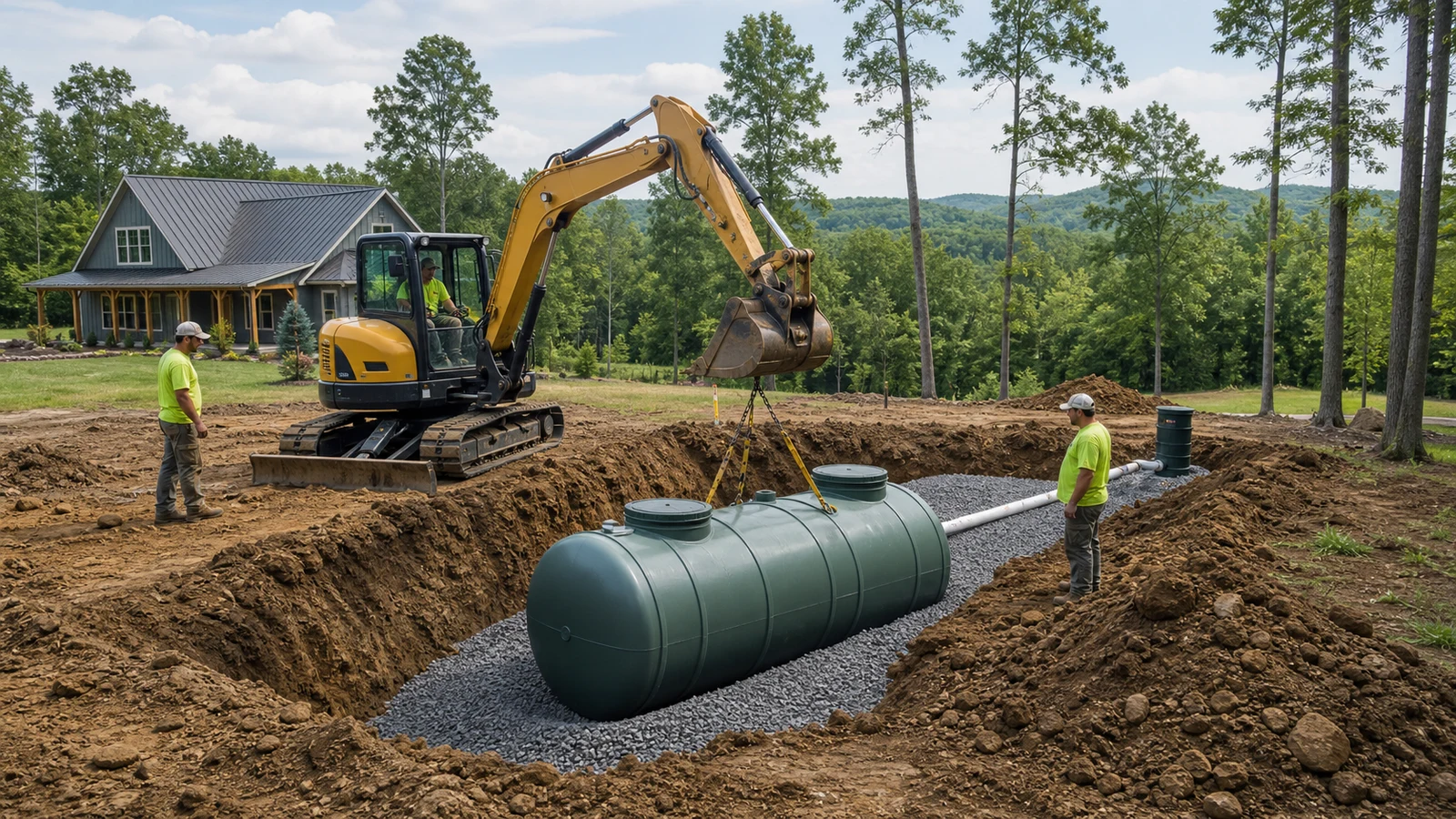
The Soil Comes First — and Drives the Rest
Every installation starts with a soil evaluation (a percolation or "perc" test and site assessment) that measures how readily the ground accepts and processes water. This isn't a formality — it's the decision that shapes the entire project. Good, deep, well-draining soil can support a straightforward conventional system. Poor, shallow, rocky, or wet soils may require an alternative design, which involves more components and more work. Because so much flows from this one result, it's the reason a firm budget only comes together after the site is evaluated. Our septic installation process guide shows where this step sits in the sequence.
System Type and Design
What the soil allows determines the system, and the system determines a large share of the cost:
- Conventional systems — a tank and a gravity-fed drain field — suit sites with suitable soil and enough space, and are the most direct to install.
- Alternative systems — such as mound systems, drip distribution, or aerobic treatment units — are used when soil, space, or slope won't support a conventional field. They add components, design work, and sometimes ongoing maintenance, all of which factor in.
Sizing matters too: the system is designed for the home's expected use, so a larger household or more bedrooms generally means a larger system.
Access, Layout, and Restoration
A septic system is heavy construction. How easily equipment can reach the work area, how the tank and field are laid out on the lot, and how much of the property has to be restored afterward all contribute. Long drives, slopes, trees, and tight lots — common on rural Upper Cumberland properties — can add to the work. Planning the layout well also protects the future: a field placed where it can be reached and maintained is cheaper to live with for decades.
Approvals
New systems follow the applicable approval process with the appropriate authority, and requirements vary by property and county. Often a qualified installer coordinates approvals as part of the project — worth confirming up front. Our guide on Tennessee septic permits and approvals covers where to direct those questions.
Why Bids Differ — and How to Compare Them
Two bids that look like they're "for the same system" often aren't. One may assume a conventional field while another accounts for an alternative design the soil actually requires; one may include design, approvals, and full restoration while another leaves them out. The way to compare fairly is to compare scope — what's included, what system type, and what happens if the soil results require a change — rather than just the total. Our guide on questions to ask before installation lists what to confirm.
Getting Started
Because the budget is built during planning, the first step is an evaluation, not a quote. Share your property details and what you're planning, and a provider can begin the assessment that leads to a real number. When you're ready, request septic service.
This guide is general information for property owners, not professional advice for any specific system. Systems, soils and requirements vary by property and county — confirm specifics with a qualified provider or the appropriate authority. Cumberland Septic Hub is an independent referral service; provider availability, qualifications, pricing and service terms are determined by the provider.
Helpful Septic Guides
- Septic Costs and Pricing Factors — the cost topic hub
- Septic Pumping and Maintenance — routine service basics
- Septic Repairs and Drain Fields — where repair costs come from
Cumberland Septic Hub is an independent referral service. Requests may be shared with an independent local septic provider, and the provider determines availability, qualifications, pricing and service terms. Read the full referral disclosure.