
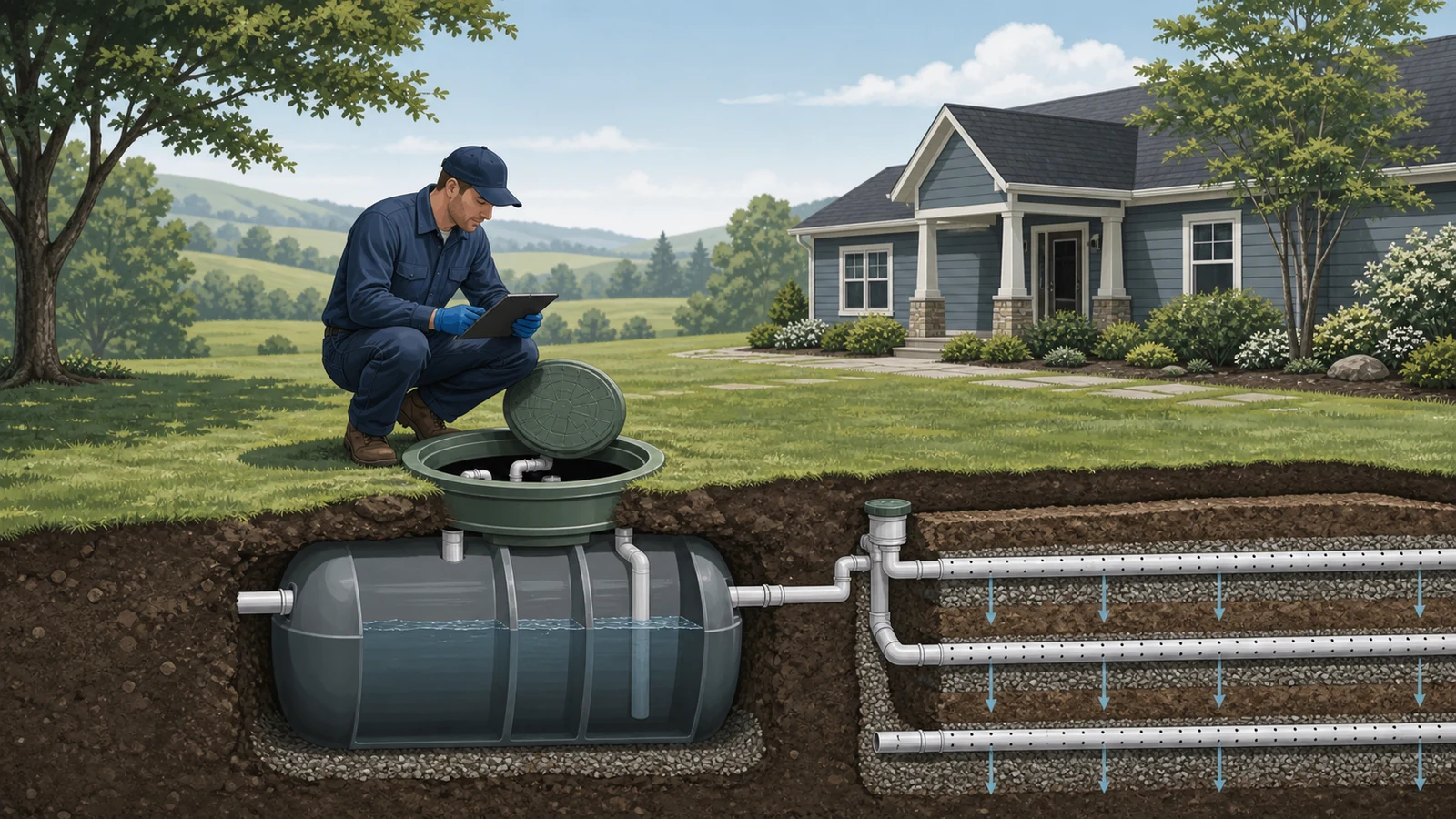
The System, Component by Component
A septic system is a chain, and repairs are about finding the weak link. Wastewater leaves the house through the inlet pipe and enters the tank past an inlet baffle that calms the flow. Inside, solids settle while liquid exits through an outlet baffle — the guard that keeps floating scum out of the field. Some systems then rely on a pump with float switches to lift effluent uphill; many pass it through a distribution box that splits flow evenly among the drain-field lines, where perforated pipe releases it into the soil.
Each link fails differently. Baffles rust and crumble. Pumps burn out and floats stick. Pipes crack, settle or crush under traffic. Distribution boxes tilt and send everything down one line. Field lines clog with roots or biological mat. The repair conversation starts with which link — never with the assumption.
How Providers Evaluate a Suspected Failure
Evaluation usually starts at the tank, because tank levels tell stories. Liquid sitting above the outlet suggests trouble downstream — the field or the line to it isn't accepting flow. Liquid below normal level hints at a leak. From there providers look at baffle condition, test pumps and floats where fitted, check how the distribution box is balancing flow, and read the field's surface for wet ground and odor. It is systematic elimination, and it is the reason a diagnosis over the phone — or from a website — is not a real diagnosis.
Why Pumping Doesn't Fix Every Backup
Pumping empties the tank; it does not repair anything. If the cause was simply a tank full of solids, pumping solves it. If the cause is a collapsed pipe, a dead pump or a field that has stopped absorbing, the tank refills with wastewater in a few days of normal use — and the backup returns on schedule. Repeated pump-outs that buy shorter and shorter relief are not maintenance; they are a symptom being billed monthly. That pattern is covered from the symptom side in the warning-signs hub.
Drain-Field Warning Signs
- Wet, soft or spongy ground over the field
- Wastewater surfacing, especially after heavy household use
- Sewage odor outdoors near the field
- Stripes or patches of unusually green, fast-growing grass
- Slow drainage house-wide that pumping only briefly improves
Important caution: none of these signs, alone, proves the field has failed. Saturated ground can follow a wet season. Green stripes can follow shallow lines doing their job. Odor can come from the tank area rather than the field. The signs justify an evaluation — the drain-field evaluation process determines the cause.
Contained Repair or Larger Problem?
The good news in septic repair: many failures are contained. A baffle, a pump, a float switch, a section of pipe or a distribution box can each be replaced without touching the rest of the system. The harder conversations involve the field itself or a structurally failing tank, where repair-versus-replacement depends on the system's age, the soil's condition, how the property is used and what current requirements allow. That decision is made after evaluation, on site — not from a symptom list. When replacement enters the picture, the installation and replacement hub covers what that project involves.
Getting a Repair Request Right
Tell the provider what the system has already been telling you: the symptoms and when they started, whether they recur after pumping, any alarms, the system's age if known, and what service has been done. Then let the evaluation lead. Request a repair evaluation and put the timeline in the details field — it is the most useful thing you can write.