
A septic service visit goes fastest — and costs least — when the crew can get straight to the tank and start working. Most of what slows a visit down is avoidable with a few minutes of preparation beforehand. None of it is complicated; it's just the difference between a crew that arrives and works and one that arrives and first has to solve a series of access puzzles on your dime.
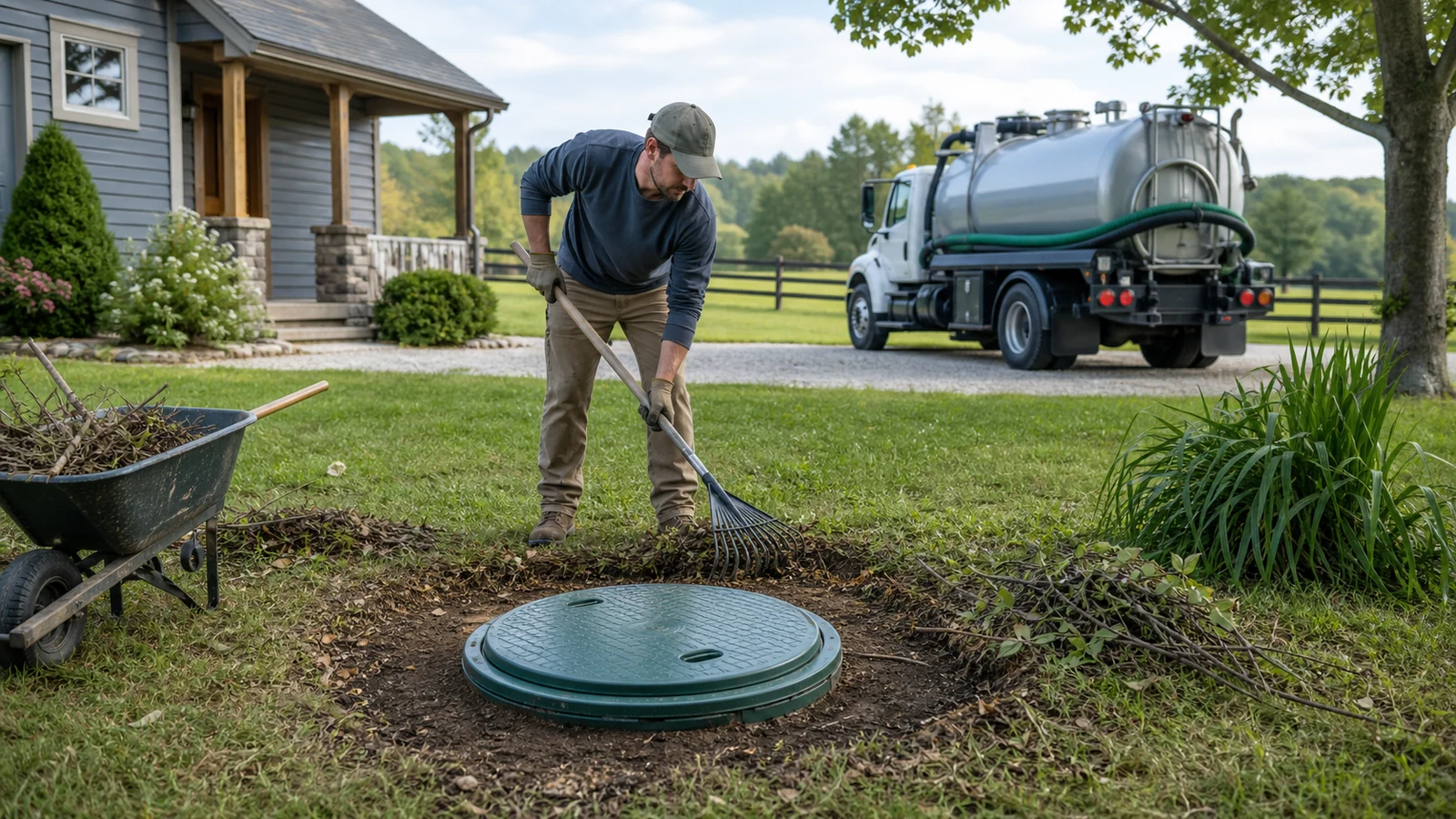
Clear a Path the Truck Can Reach
Septic trucks are heavy, and the vacuum hose only reaches so far, so the truck has to get reasonably close to the tank. Before the appointment, think about the route: unlock or open gates, clear anything blocking the drive, watch for low branches a tall truck won't clear, and consider soft or muddy ground after rain. On the rural and wooded lots common across the Upper Cumberland, access is often the biggest variable in how a visit goes — our guide on how terrain and access affect service covers why.
Make the Lids Accessible
This is the big one. If the tank lids are buried under soil, mulch, a deck, or landscaping, they have to be uncovered before pumping can begin — and that digging is frequently the largest single add-on to a service bill. If you know where the lids are, expose them (or clear what's on top) before the crew arrives. Better yet, if you find yourself uncovering lids every time, ask about risers that bring them up to ground level permanently; they pay for themselves by removing the dig on every future visit. Our guide on pumping cost factors explains how much access drives the price.
Know Where the Tank Is
If the tank's location is known, point it out or mark it. If it isn't, that's worth solving in advance, because otherwise the provider spends time locating it on the day. Records, past service receipts, or physical clues can help you find it — and our guide on finding septic records and tank locations walks through where to look. Once it's found, write down its position measured from two fixed points on the house so this is the last time anyone has to search.
If You're Still Not Sure Where It Is
Don't worry if you genuinely can't find the tank — it's common, especially on older properties. A provider can locate it as part of the visit; see septic tank locating. Just flag it when you book so they arrive prepared for it.
Ready to Schedule
With access cleared, lids reachable, and the tank's location known, a routine service visit is quick and straightforward. When you're set, request septic service and mention anything about your property's access that would help the crew arrive prepared.
This guide is general information for property owners, not professional advice for any specific system. Systems, soils and requirements vary by property and county — confirm specifics with a qualified provider or the appropriate authority. Cumberland Septic Hub is an independent referral service; provider availability, qualifications, pricing and service terms are determined by the provider.
Helpful Septic Guides
- Upper Cumberland Septic Guide — the regional hub
- Septic Installation and Replacement — regional planning
- Septic Inspections and Property Buying — rural purchases
Cumberland Septic Hub is an independent referral service. Requests may be shared with an independent local septic provider, and the provider determines availability, qualifications, pricing and service terms. Read the full referral disclosure.