
Three Inspections, Three Purposes
“Septic inspection” covers three fairly different services, and knowing which one you need changes what to request. A maintenance inspection checks a working system's condition — baffles, levels, lids, visible components — to catch small issues early and build a paper trail. A problem-focused inspection is diagnostic: something smells, gurgles, or backs up, and the goal is finding out why. A real-estate transaction inspection documents system condition for a purchase or sale, where the audience includes buyers, sellers, agents and sometimes lenders.
Why Transactions Are Where Inspections Matter Most
A house on septic includes a buried system worth many thousands of dollars, and the buyer usually inherits it with no history whatsoever. The seller may genuinely not know where the tank is. In this region's rural and lake markets — covered in the regional guide — the septic system is routinely the largest unknown on the property. An inspection converts that unknown into information while there is still time to act on it: before closing, not after the first backup.
What an Inspection May Involve
- Locating the tank and access points — sometimes a project in itself when records are missing; see tank locating
- Reviewing available records — service receipts, past inspections, any county documentation the owner can produce
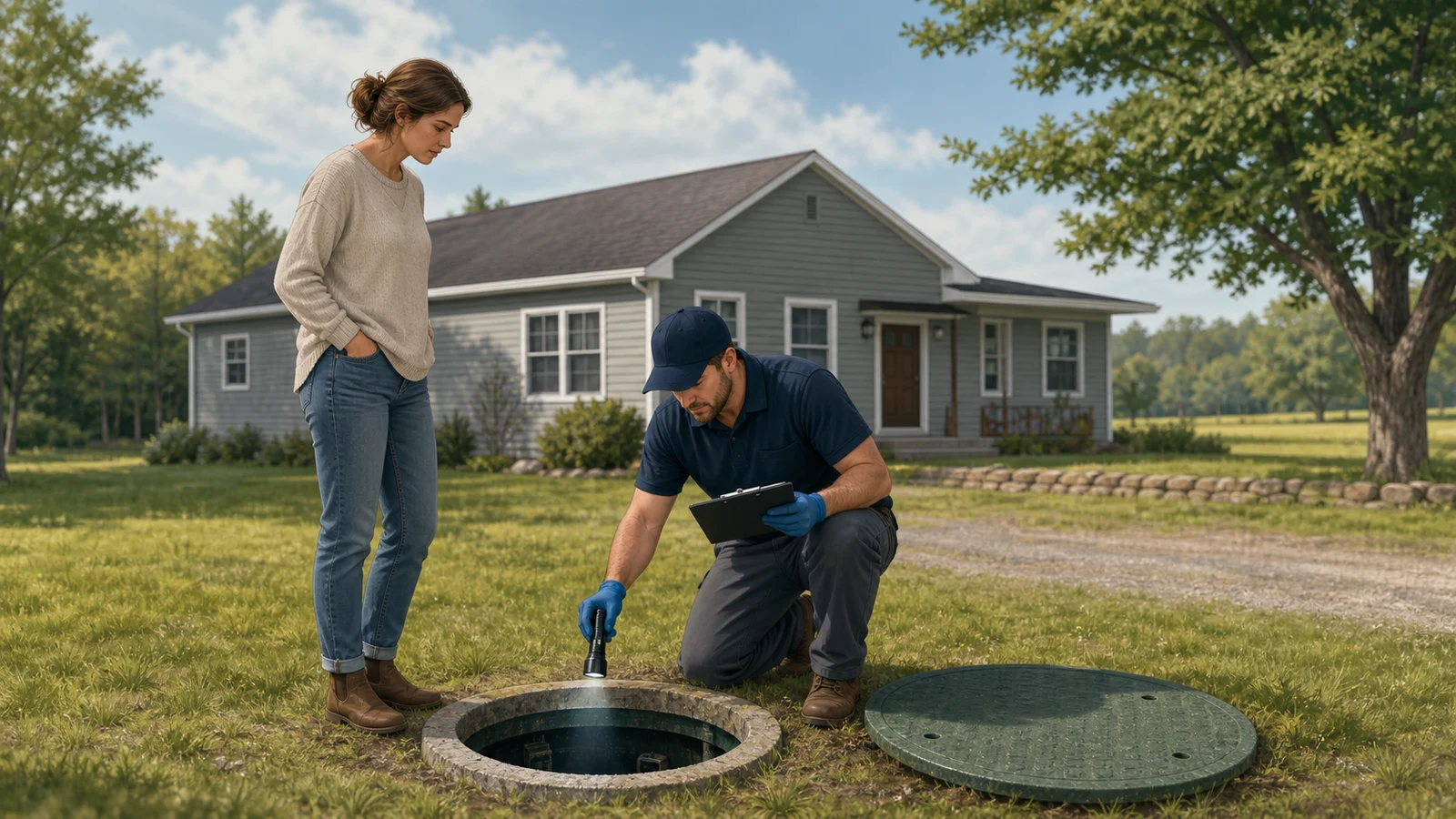
- Visual inspection — lids, baffles, liquid levels and visible components, often with the tank opened
- More extensive testing where the scope calls for it — flow or load testing, pumping the tank for a full interior look, walking and probing the field
Scope is the whole game. A visual check with lids already exposed and a locate-excavate-pump-document engagement are both honestly called inspections — at very different depths and fees. Confirm the scope before service, in writing where a transaction depends on it.
Questions Buyers and Sellers Should Ask
- Will the tank be opened? Pumped? Is the drain field walked and probed?
- What documentation is produced, and is it suitable for this transaction?
- What did previous owners keep — service records, tank location, lid depth?
- What is the system's age, and does its capacity match the household moving in?
- For sellers: is it worth inspecting and servicing before listing, ahead of buyer questions?
The Limits of an Inspection
An honest inspection describes what could be observed on the day — it is not a warranty, a prediction of system lifespan, or a guarantee against future problems. Buried components can only be evaluated to the extent access allows, and a field that performed under inspection conditions can still struggle under a bigger household's load. Just as important: lender, buyer, seller, county and provider requirements may all differ, and no inspection can be guaranteed acceptable to a lender, a county or a government authority. Confirm what your specific transaction requires with the parties who will rely on the result.
Requesting an Inspection
Say what the inspection is for — maintenance, a suspected problem, or a transaction with a closing date — and what is already known about the tank location and records. Purpose drives scope, and scope drives everything else. Request a septic inspection and include the transaction timeline if there is one.