Two nearly identical homes can be completely different to service if one sits at the end of a long, soft, sloping drive and the other is a few steps from the road. In septic work, terrain and access aren't background details — they're often the biggest practical variables in how a job goes, especially across the varied ground of the Upper Cumberland. Understanding how they come into play helps you plan and helps a provider serve you efficiently.
Getting the Truck to the Tank
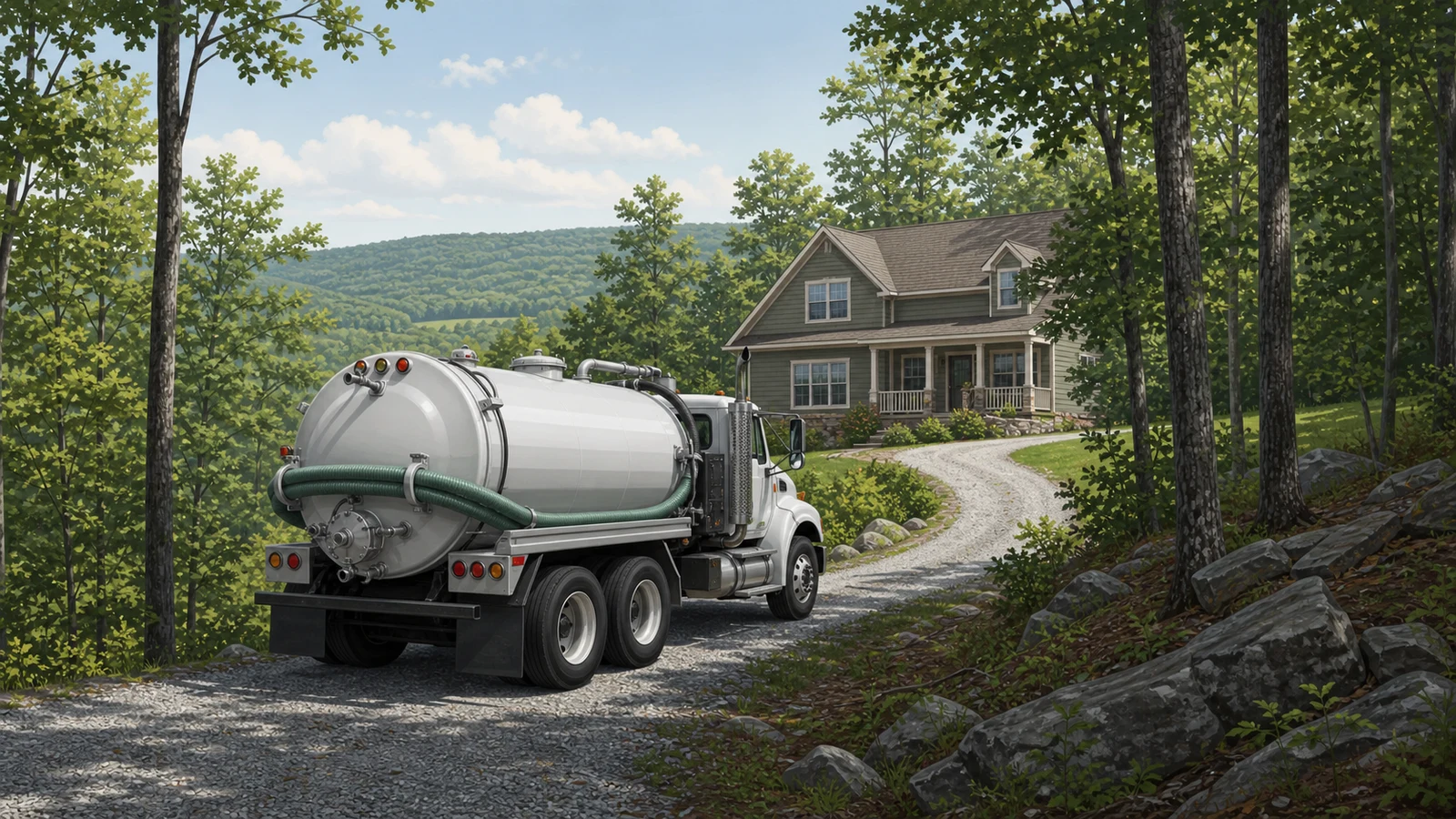
The most immediate way terrain matters is simply reaching the tank. Several things come into play:
- Distance. Vacuum hoses have a practical length, so how far the tank is from where a truck can park is a real factor — a tank behind the house or down a long drive is more involved than one near the road.
- Slope. The plateau's grades affect how a heavy truck approaches and where it can safely position.
- Soft ground. Low-lying and river-valley areas can stay soft or saturated after wet weather, and heavy trucks and soft ground don't mix well.
- Route obstacles. Narrow or locked gates, low branches, and tight turns all shape whether — and how easily — a truck gets close.
How Terrain Shapes the System Itself
Beyond service-day access, terrain and soil shape what system a property can have in the first place. Rocky plateau ground, heavy clay, shallow soil, and slope all influence whether a conventional system works or an alternative design is needed, and how the field is laid out. This is why the region's soils make a soil evaluation so important — our guide on planning for rural properties goes into how that plays out across the Upper Cumberland.
Planning Around It
You can't change your terrain, but you can plan around it. Keeping access clear and the tank location known removes the variables you control — our guide on preparing a property for septic service covers how. And when you request service, describing your access realities up front lets a provider bring the right approach and equipment, which keeps the visit efficient and avoids a wasted trip.
Getting Service That Fits Your Property
The more a provider knows about your terrain and access before arriving, the better the visit goes. When you request septic service, mention the driveway, any gates or soft spots, the distance to the tank, and whether the tank and lids are known and accessible — those few details make all the difference on a rural call.
This guide is general information for property owners, not professional advice for any specific system. Systems, soils and requirements vary by property and county — confirm specifics with a qualified provider or the appropriate authority. Cumberland Septic Hub is an independent referral service; provider availability, qualifications, pricing and service terms are determined by the provider.
Helpful Septic Guides
- Upper Cumberland Septic Guide — the regional hub
- Septic Installation and Replacement — regional planning
- Septic Inspections and Property Buying — rural purchases
Cumberland Septic Hub is an independent referral service. Requests may be shared with an independent local septic provider, and the provider determines availability, qualifications, pricing and service terms. Read the full referral disclosure.