When you sell a home on a septic system, there's one question you can count on: a serious buyer, or their inspector, will want to know the condition of the system they can't see. You can let that question surface at the worst possible moment — mid-negotiation, on a deadline — or you can answer it before you list. Sellers who choose the second path tend to have calmer sales and more leverage.
Why Getting Ahead of It Pays
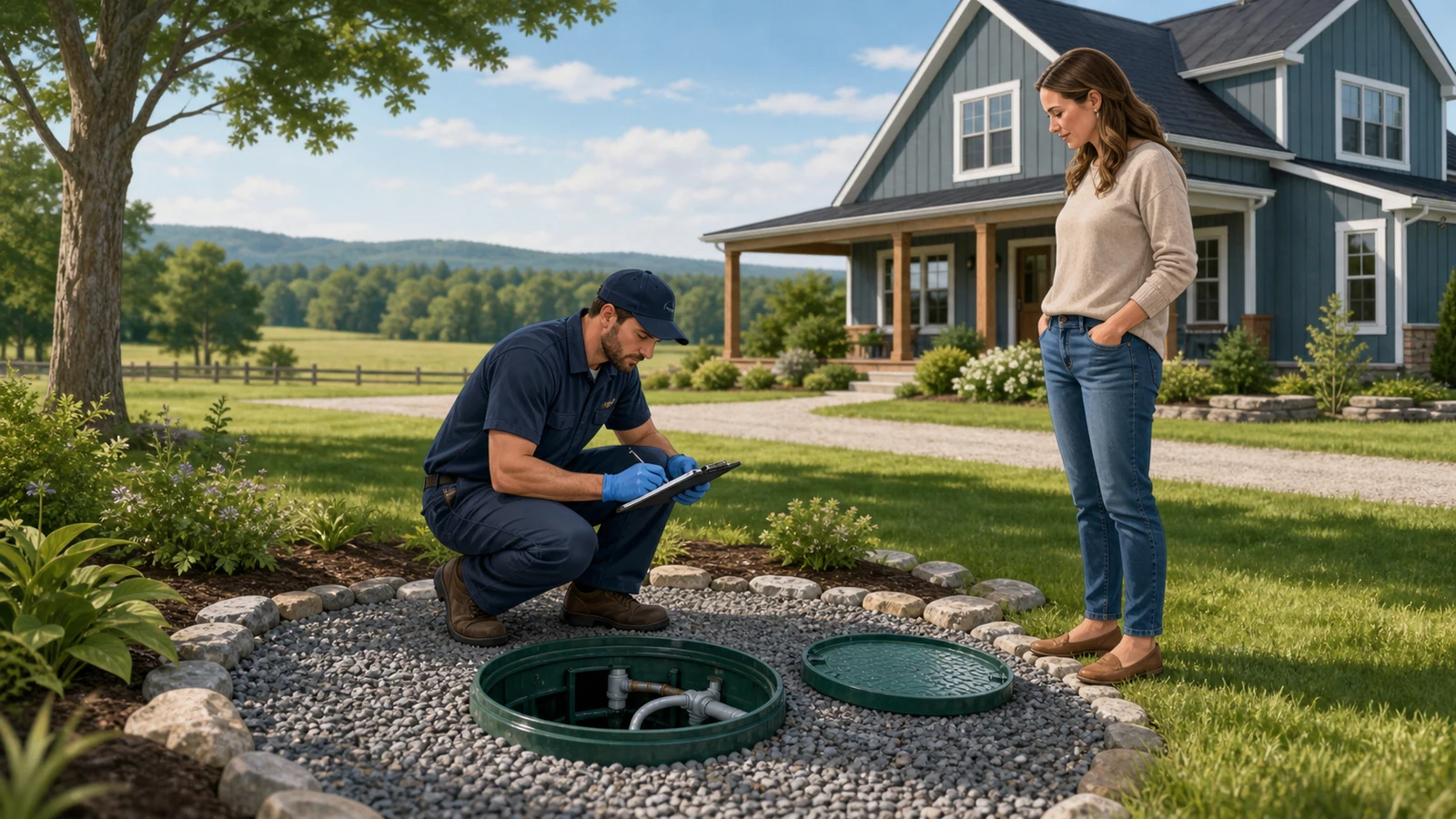
A pre-listing septic inspection changes the dynamics of a sale in three concrete ways:
- No surprises. You learn the system's condition on your terms, not when a buyer's inspector delivers unexpected news during escrow.
- Time to act. Any issue can be evaluated and addressed on your own schedule, when you can weigh options calmly — not under the pressure of a pending closing.
- Buyer reassurance. A recent inspection and clear records reduce a buyer's uncertainty, which tends to reduce renegotiation and keep deals on track.
What Buyers Will Want to Know
Buyers of septic properties (and their agents) increasingly treat a septic inspection as essential — our companion guide on inspections when buying a home lays out exactly what they're looking for. Knowing what the other side will ask helps you prepare the right answers: the system's condition, its location and layout, service history, and any documentation you can provide.
Gather Your Records
Half of a smooth septic conversation is simply having the paperwork. Before you list, pull together whatever you have: the tank's location, service and pumping dates, any past repairs, and prior inspection reports. If records are thin — common on properties you've owned a while or bought without them — our guide on finding septic records and tank locations covers where to look and how a provider can fill the gaps.
If the Inspection Finds Something
Finding an issue before listing isn't bad news — it's the whole point of doing it early. With time on your side, you can have it evaluated, understand what it would take to address, and choose your approach: fix it before listing, disclose it and price accordingly, or negotiate from a position of knowledge. The expensive version of any septic issue is the one discovered under a closing deadline; the early version is just a decision.
Getting Started
A pre-listing inspection is straightforward to arrange, and the earlier you do it, the more room you have to act on whatever it finds. Request septic service to set one up, and start pulling your records together in parallel.
This guide is general information for property owners, not professional advice for any specific system. Systems, soils and requirements vary by property and county — confirm specifics with a qualified provider or the appropriate authority. Cumberland Septic Hub is an independent referral service; provider availability, qualifications, pricing and service terms are determined by the provider.
Helpful Septic Guides
- Septic Inspections and Property Buying — the inspections hub
- Septic Inspections When Buying a Home — the buyer guide
- Upper Cumberland Septic Guide — rural property context
Cumberland Septic Hub is an independent referral service. Requests may be shared with an independent local septic provider, and the provider determines availability, qualifications, pricing and service terms. Read the full referral disclosure.