
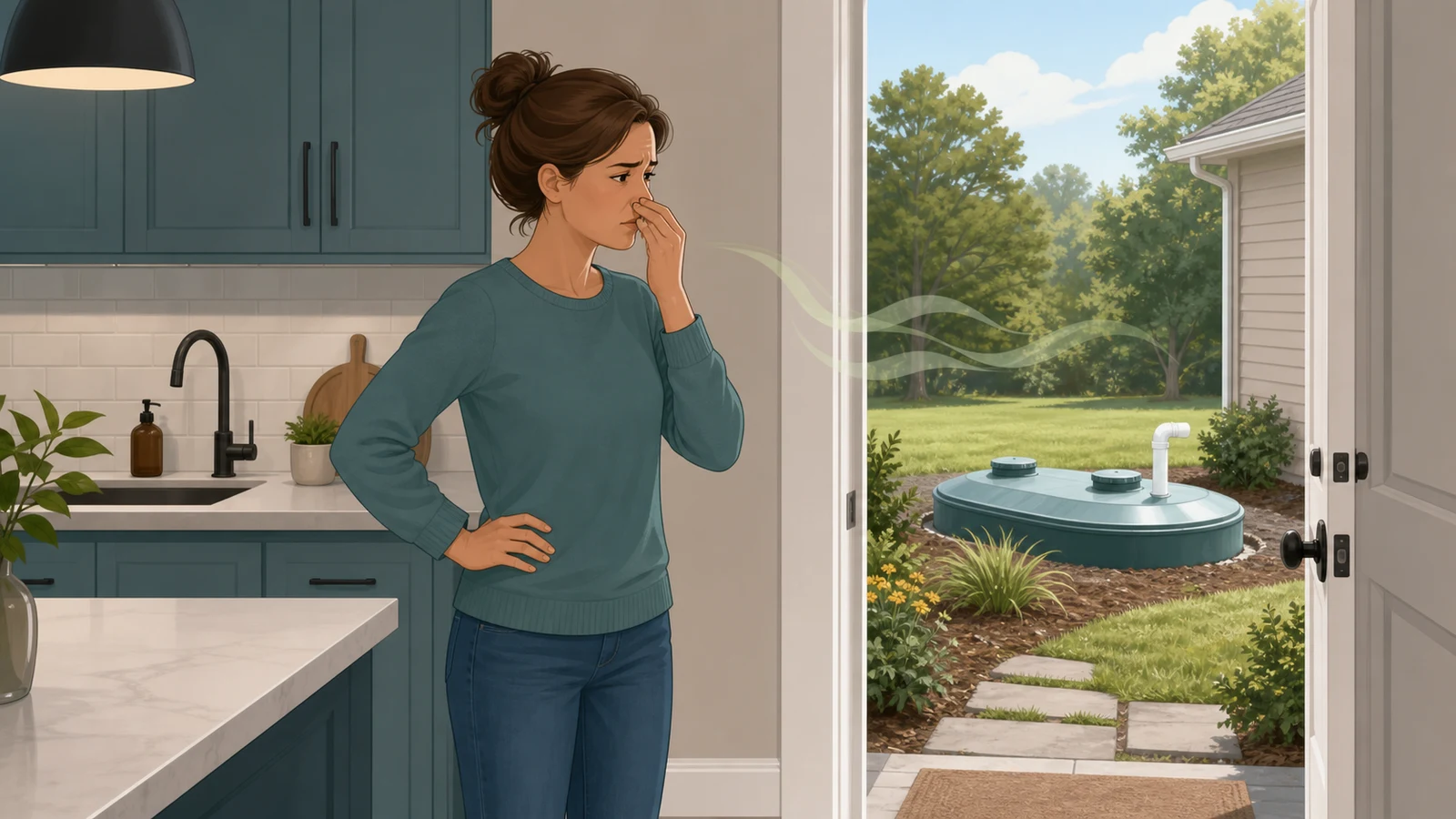
Smell is one of the earliest and most honest signals a septic system gives. The trouble is that "it smells like septic" can mean several very different things, from a harmless dried-out drain to a field in real distress. The key is to treat the odor as information: where you notice it, and when, narrows the possibilities considerably.
A Little About the Gases
A working septic system produces gases as bacteria break down waste — that's normal and expected. In a healthy setup those gases are contained in the tank and vented safely up through the home's plumbing vent stack, well above where anyone would notice them. You smell a problem when that containment or venting breaks down somewhere, so the question is always: where is the gas escaping, and why?
Indoor Odors
A smell inside the house often has a plumbing explanation before a septic one. The most common and easily fixed cause is a drain trap that has dried out — a floor drain, a guest bathroom, or a seldom-used sink whose water seal has evaporated, letting sewer gas drift up. Running water to refill the trap frequently solves it. Venting issues, where the plumbing vents that balance air pressure aren't working properly, can also let odors into the home. If simple fixes don't resolve a persistent indoor smell, it can point to the system not moving waste along as it should, which is worth having checked.
Outdoor Odors — Near the Tank or Over the Field
A smell outside tends to be more telling. An odor concentrated near the tank or its lids can point to the tank or its access. An odor over the drain field — especially alongside soggy ground or unusually lush grass — can suggest the field is struggling to absorb and treat wastewater, which is a more significant issue. Our guide on signs of drain-field trouble covers those clues in depth. Outdoor septic odors generally warrant an evaluation rather than a wait-and-see approach.
When an Odor Is an Early Warning
Because the same smell can have very different causes, an odor is best read as a prompt to investigate — and it's especially worth acting on when it arrives with company. A smell together with slow drains, gurgling, or wet spots over the field is the system telling you something is developing, and catching it early is far cheaper than waiting for a backup. Our overview of septic warning signs shows how these symptoms fit together.
What to Do
Start with the simple indoor checks — refill unused drain traps and see whether an indoor smell clears. For anything persistent, or any odor outdoors over the tank or field, have the cause identified rather than masked. Request septic service and note where and when you notice the odor and any other symptoms; those details help a provider pinpoint it quickly.
This guide is general information for property owners, not professional advice for any specific system. Systems, soils and requirements vary by property and county — confirm specifics with a qualified provider or the appropriate authority. Cumberland Septic Hub is an independent referral service; provider availability, qualifications, pricing and service terms are determined by the provider.
Helpful Septic Guides
- Septic Problems and Warning Signs — the problems hub
- What to Do When Sewage Backs Up — backup safety steps
- Septic Repairs and Drain Fields — how issues are evaluated
Cumberland Septic Hub is an independent referral service. Requests may be shared with an independent local septic provider, and the provider determines availability, qualifications, pricing and service terms. Read the full referral disclosure.