
Everyone knows the sound: a toilet or drain that bubbles and gurgles after you run water somewhere else in the house. It's easy to ignore, but on a septic system it's worth a moment's attention, because a gurgle is literally the sound of air going where water should be flowing smoothly — and sometimes that's a small quirk, and sometimes it's an early warning.
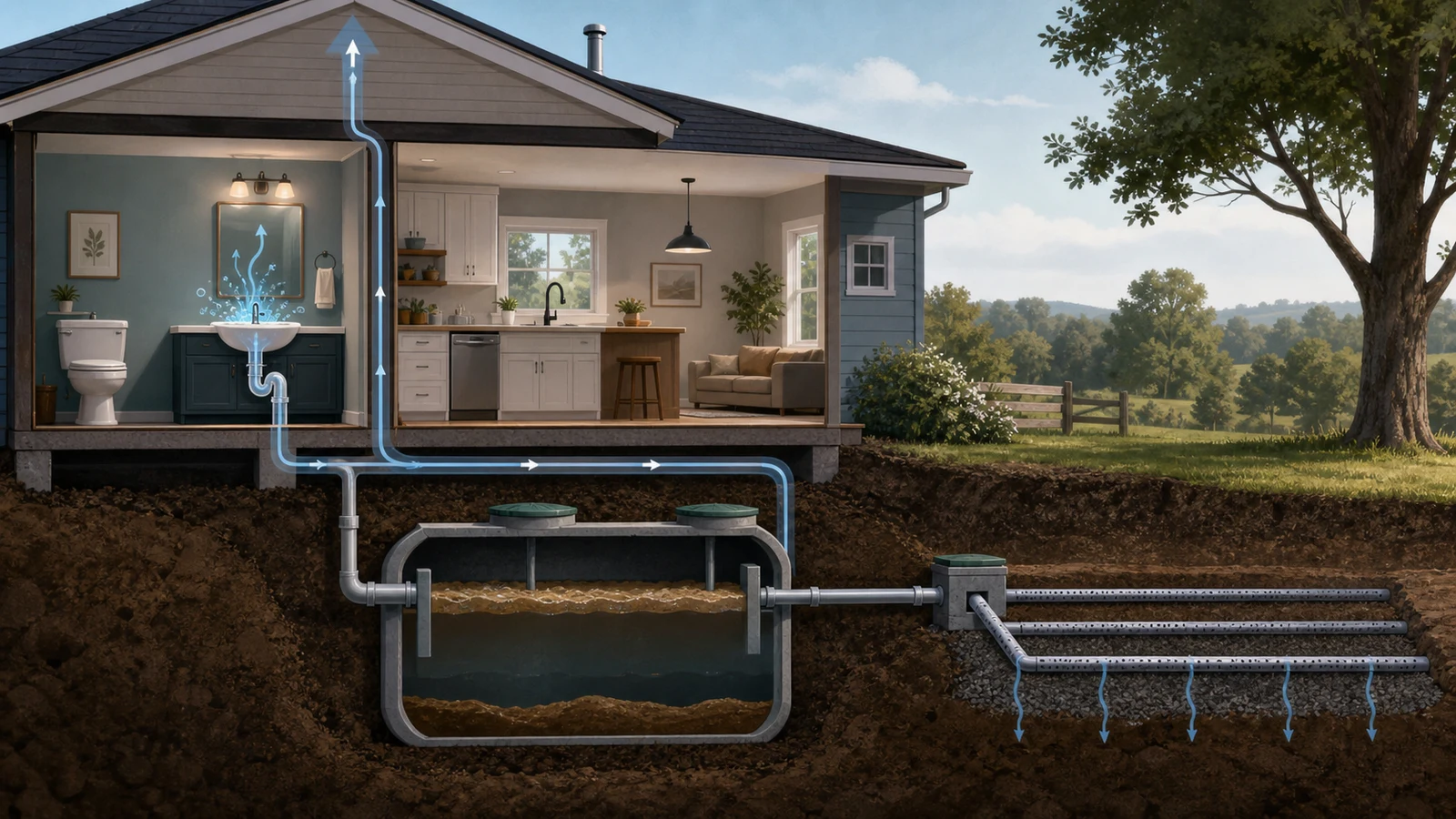
Why a Drain Gurgles
Household plumbing is designed so that water flows down and out while air moves freely to balance the pressure — that's what the vent pipes on your roof are for. When something restricts that smooth flow, water and air compete in the pipes, and trapped air escapes past the water as a gurgle at whatever fixture is nearby. So a gurgle always means flow is being restricted somewhere; the question is where, and how seriously.
The Common Causes
- A filling or full tank. When the tank is near capacity, the system can't accept water as readily, and the resulting restriction shows up as gurgling — often the first audible sign a tank is due. See signs a tank may be full.
- A partial blockage. Roots, grease buildup, or debris in the line between the house and tank can restrict flow and cause air to gurgle back.
- A venting issue. If the plumbing vents that balance air pressure are blocked or inadequate, drains can gurgle even when the tank and field are fine — a plumbing problem rather than a septic one.
- A drain field that can't keep up. When the field is struggling to accept water, the backup of pressure can reach the house as gurgling, usually alongside other symptoms.
Harmless Quirk or Early Warning?
Context is everything. An occasional, isolated gurgle with drains that otherwise run normally is usually low-concern and worth simply noting. Gurgling that's getting more frequent, or that arrives with slow drains, odors, or wet ground over the field, is a different story — that combination is often the system's early announcement that it's starting to back up, and it's much cheaper to address at the gurgle stage than at the backup stage. If you're already seeing a backup, see what to do when sewage backs up.
What to Do
If the gurgling is persistent or paired with any other symptom, have the cause identified rather than waiting to see if it clears. Because the sound can come from the tank, the line, the vents, or the field, an evaluation is what tells them apart instead of guessing. Request septic service and describe when the gurgling happens (for example, after the washer drains) and any other signs you've noticed.
This guide is general information for property owners, not professional advice for any specific system. Systems, soils and requirements vary by property and county — confirm specifics with a qualified provider or the appropriate authority. Cumberland Septic Hub is an independent referral service; provider availability, qualifications, pricing and service terms are determined by the provider.
Helpful Septic Guides
- Septic Problems and Warning Signs — the problems hub
- What to Do When Sewage Backs Up — backup safety steps
- Septic Repairs and Drain Fields — how issues are evaluated
Cumberland Septic Hub is an independent referral service. Requests may be shared with an independent local septic provider, and the provider determines availability, qualifications, pricing and service terms. Read the full referral disclosure.